A Writer’s Guide to the Best Books about Writing

A Writer’s Guide to the Best Books about Writing

Ack! It’s been a while. I’ve spent a lot of time researching the craft, and absorbing myself in practice.

I was inspired to write this blog post because I frequently spend a lot of time typing “best books about writing” into Google. Thanks to time spent in used bookstores, titles loaned by writer relatives, and painstakingly going through the small section of writing books at my local Barnes and Noble, I’ve been able to compile a list of the top three books I recommend about writing (right now).

Let’s get into it.

The Happy Writer by Marissa Meyer

As someone that’s written professionally for well over a decade, I found this book to be extremely helpful. What’s better than a book about craft from the Marissa Meyer? You know, the lady that wrote the bestselling Cinder series?

Here are my takeaways from The Happy Writer:

  • You must have an idea file. I recently subbed to Evernote, a handy little notetaking app. I used it in the past, but I currently find it extremely helpful in organizing my writing life. Don’t worry, I’m not getting paid to mention this app, I don’t have it like that :). I’ve found the idea file helpful, because I’ve accepted the fact that ideas don’t have to be perfect, they just have to be noted. There are things in my idea file that I cannot wait to get to, but I’m working on about three projects right now, not including this blog.
  • It all adds up. Meyer touches on the fact that a lot of us tend to ignore when we’re so focused on completing a grand project all at once for the sake of our ego. She mentions how anyone can build writing into their day, even the busiest people. Ten minutes there, 15 here, five while waiting for appointments, every bit of writing is valuable, because dutiful practice is priceless.
  • Pick three things. I really like this strategy. As an ADHD person that has a hard time prioritizing tasks (hence me subscribing to a note taking app, using the notes app on my iPhone, and bullet journaling). Pick three things. Meyer says they don’t even have to necessarily be writing. Example: nail trim for dog, dishes, litter box. And then you might build on it throughout the week: five minute writing practice, dentist appointment, pick up groceries.

Fire Up Your Writing Brain by Susan Reynolds

This book blends neuroscience and creativity to create a writer’s companion that easily breaks down how to hack your brain to write consistently and write well.

I will point out that I’m usually not a fan of Brain Books. I usually find them dull, but I appreciate all of the contributions that have been made to neuroscience over the last decade.

Here’s the first thing about this guide:

You will not find this book in a Google Search.

Or at least, I didn’t. I’ve scoured the web for so many books on writing, and this one hasn’t ever appeared in a search. I don’t know who Susan Reynolds pissed off. I only have the book because my mother-in-law (also a writer) found it in a Barnes and Noble several years ago.

And here’s a few MORE things about this book:

  • It is a long book. Be prepared, this might take a few sessions to get through, and mine is obviously well loved based on the picture above.
  • It has small personalitiy tests to help you figure out what writing process works best for your brain. You’ll find several quotes from famous authors in this one.
  • Without spoiling too much, I really appreciated the way that Susan honors the writer’s brain by acknowledging how much is going on in our brains at any given time. An idea that really stood out to me was this: When you’re working on a project and you’re stuck, consciously ask your brain to work on it in your subconscious. When I was suffering as a freelance ghostwriter for years, I often found myself uninspired and frustrated because it wasn’t something that I care about. After reading Susan’s book, I would think about the current project and say to my brain: “I want you to work on this for me. Think on it.” And then I’d go on with the rest of my day, often avoiding the project entirely! (If you are thinking of ghostwriting fiction for pennies, I will hold your hand and tell you not to do that shit. It’s like being someone’s surrogate but they refuse to pay for the baby’s expenses and doctor appointments, and then they come back with vague complaints about how the baby’s forehead skin is wrinkled. Excuse me??)
  • It touches on the value of doing absolutely nothing and calling it part of the writing process. Reynolds recommends allowing for a two hour block of time, if you can, where you do nothing but contemplate your main idea. (It’s so hard to focus on just one idea, though! But she’s the expert.)

Last, but certainly not least….
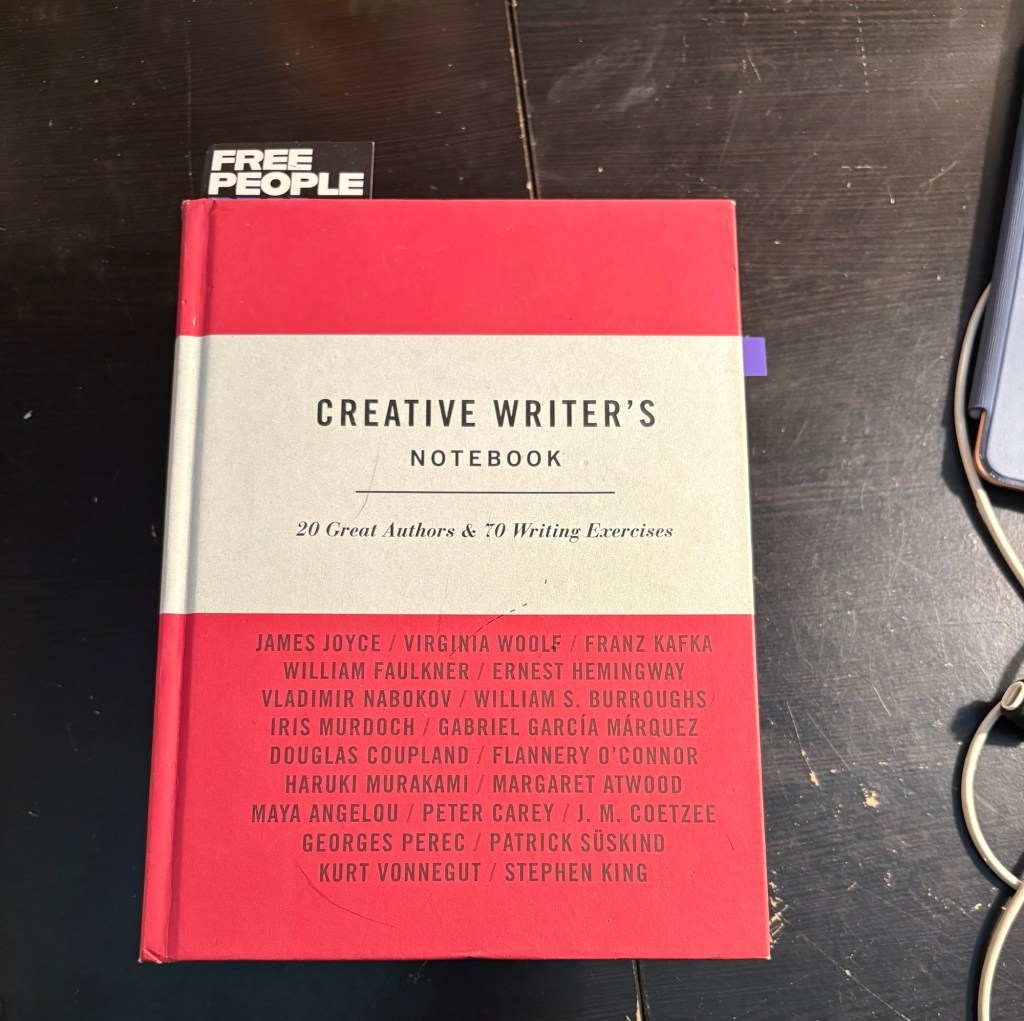
Creative Writer’s Notebook by John Gillard

Wow, wee, oh wow! This one has been a delightful challenge! Gillard has curated the best collection of writing challenges and lessons from some of the greats. Normally, I’m not a sucker for any of the ‘classics’, preferring to focus on more contemporary works, but the Creative Writer’s Notebook is just a master class on how to write well.

  • This book offers ‘put your money where your mouth is’ writing exercises that challenge you to think more expansively. I fee like this book is a low cost peek into a creative writing class. Or writing workshops. If you have social anxiety about either of them, then this is a great alternative!
  • The book is meant to be written in, as all of the prompts come with lined pages underneath the lesson.
  • I purchased mine at Half Priced Books, but you can also snag it on Amazon for about $31. Again, it’s an investment.
  • Here’s an example of one of the prompts I experimented with: Drinking black coffee in a roadside cafe. There is no cream or sugar. My brain kind of started this rapid fire process with this one. There is so much that is being said and not said in just these two sentences. I used the prompt to write about one of the main characters in my upcoming collection of short stories. I used this brief prompt to springboard into a sample about a tense breakfast with a man that doesn’t challenge the FMC. Chaos ensues.

This one is by far my favorite one on the entire list— here’s a few juicy pics from the book:

A lil lesson on Hemingway
There’s always a brief introduction of the writer and what their biggest contributions to style and craft were.
These are the kind of prompts that challenge me the most. I’ve never been skilled at extremely short flash fiction.

Okay, there’s my roundup! I hope you enjoyed browsing this list, it was a labor of love and experimentation. I hope to post again next week if life doesn’t get in the way.

What books about writing would you recommend?! Let me know in the comments!
How to Write When You Have Seasonal Depression

How to Write When You Have Seasonal Depression

Hello, readers! I come to you with a humble blog post about writing when you feel like you can’t go on. I have written professionally for years, and every year, I’m faced with what Adam Gnade has coined the Big Sad.

It’s the same every year. I lose motivation to do fuck all but eat, drink coffee, and eat again. I’m snappier and I’m harder to love, but I can tell you that I can avoid being either of those things when I’m writing. I’m not myself when I’m not writing. I put on my people suit and go to work, and pretend to be the kind of person that would be happy working for someone else for the rest of my life.

But there’s no fooling myself. Or my loved ones.

If you are a writer, to survive the winters, you must write.

Easier said than done, especially when you’re constantly beating yourself up over all the writing you haven’t done. So, here is my advice to you, things that I have learned the hard way when it comes to the beautiful art of writing. (I don’t know why more people don’t call writing an art, but instead a craft)

Take Advantage of Your Upswings

Most folks with seasonal depression tend to have very good days and very bad, rotten days. When you find yourself graced with a good day, go to your writing desk. Or couch. Or closet (more on a good writing space later).

The feeling of having written will carry you through on the bad days like a lifeline. Writing will ultimately give you purpose. And you don’t have to write for a super long time, either!

On my worst days, I can only manage a 5 minute writing prompt or brain dump. But I at least give myself my best chance, and I sit down at my desk. It is not easy, and it takes a lot of buildup. Some days coffee is the only thing that brings me there.

Sensory Goodness

I’m neurodivergent in a lot of ways. I won’t get into it here, but essentially, my senses are more easily agitated than neurotypical people. I can’t stand the sound of the kid running upstairs when it is comparatively a low mumble to my husband, who’s neurospicyness allows him to ignore it with the help of a pair of noise cancelling headphones. Strong smells inspire anger, and being too hot or too cold drives me nuts.

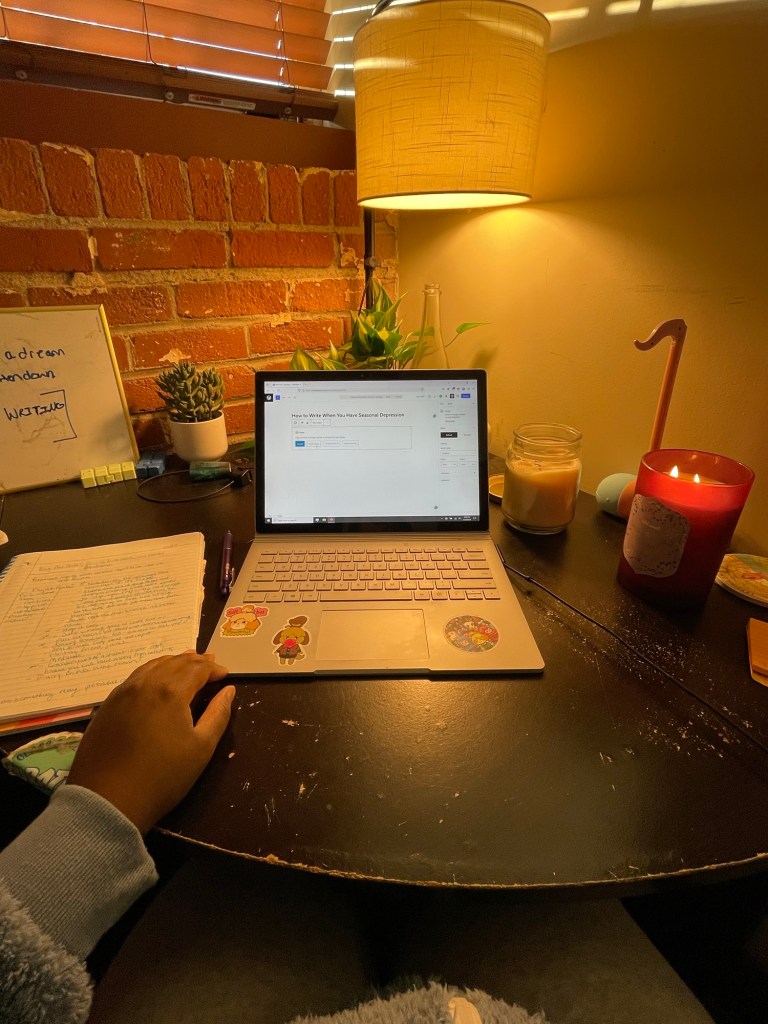
Invest in the things that make it easier to be at your desk. Create a soft environment with just a little clutter. Light a candle (or two), and throw on some earbuds. As I write this, I’m listening to lofi hip hop beats through my over ear headphones. I’m wearing a comfortable pair of sweats, and a fluffy jacket and my hair is in plaits. I look like a complete ragamuffin. But that’s what I need to work.

Start Meditating

I recently started meditating again and it has been life changing. My low mood has improved and I look at things with more optimism. I only mediate in 3 minute spurts using an app, and it works wonders for me. I also practice rectangle breathing (breathe in the nose for 4 seconds, hold for 2, then out for 6).

Meditation has cleared my mind enough to be clear about my goals and what I hope to accomplish with my writing. It’s also been a way for me to take it easy when it feels like I should be writing.

Become a Student in Your Craft

I know I said writing should be called an art earlier, but you get the idea. I love nothing more as a form of productive procrastination than acting as a student. I read books on writing, do writing exercises, and read magazines to see what other writers have accomplished. A particularly good book about writing instruction is Natalie Goldberg’s Writing Down the Bones. She takes a Zen approach, and it’s a great, easily digestible read with some lessons on writing.

Writing courses are expensive, so if you want to be a writer, learn all that you can from books.

No News Unless It’s Book News

Oof. Easier said than done. I try to limit my news viewing, especially post-election. I let myself read as much book news about publishing, and all the new stuff coming out by reading about it on sites like Book Riot. I like to wrap myself in a cocoon where books are my only reality.

Read, Read, Read

If you can’t manage to make it to your desk, or sofa, or coffee table to write, then read a book. And read lots of them. When you’re reading a book, you’re still learning how to be a writer but without the excruciating feeling of trying to get blood out of a rock when you sit down to write and it just isn’t happening that day.

Read widely. Go to bookstores and libraries, get an e-reader, or listen to audiobooks. One of my defense mechanisms against the Big Sad is that when I get up in the morning before the intrusive thoughts start to settle in, I put on my over-ear headphones and listen to an audiobook or a podcast about writing.

Now, Go and Write!

After reading this post, I hope you feel more confident about your writing practice. If you don’t, I’m sorry. Just know I am here with you and you are not the only one struggling to get things done. Feel free to leave a comment on how you manage your writing practice throughout the winter months.

Till next time!

Alicia

Sager Slam Dunk

Sager Slam Dunk

Hello, readers! I just missed being able to post this one on Halloween, but such is the way when you have seasonaI depression.

If there’s one thing you’ve gleaned about me from this blog, it’s that I am a Sager fangirl. I’m willing to give just about any of his books a try. This book doesn’t dither or dally, and it jumps straight into the action.

I listened to this one and read a physical copy and I was glued to the edge of my seat. There were times when I was just sitting there listening to the story while not doing anything else to keep my hands busy.

This is another Sager book that begs the question, “Is it a ghost story or a thriller?” And honestly? I’ll let you figure that out. Sager has done the ‘haunted house’ trope before and in this one he took another shot at it and it was a slam dunk.

The book is a solid 4/5. First of all, it’s about Ethan, a 40 year old man who has recently moved back home, where a tragedy occurred 30 years ago.

When Ethan was 10 years old, he and his friend Billy camped out in his backyard. When Ethan woke up the next morning, Billy was gone. Ethan’s parents and the entire neighborhood searched for him, but their efforts were in vain.

Billy was never recovered.

Survivor’s guilt and anxiety have plagued Ethan for years. When he moves back into his childhood home after his parents have decided to move to Florida, he’s reminded of that one summer night on a near-constant basis.

Old friends reconnect with him as the secrets of his old culdesac reveal themselves. In true Sager fashion, you won’t see (or at least I hope you won’t see) the twist(s) coming.

You can snag this one on Amazon here. Or, if you feel that Amazon has enough money (they do), then you can visit your local library, chat with a librarian, and borrow a copy of Sager’s latest.

I look forward to checking in after my next read, and if there’s something you think I should review, either comment or email me at alicia@ajcreads.com.

Also!

If you have recently published a cool book on Kindle Unlimited, I’d love to read it! And I also might review it! So, hit me up, fellow indie writers.

Till next time.

Alicia

I Don’t Know, a Ghost Maybe?

I Don’t Know, a Ghost Maybe?

Hello! Welcome back to ajcreads. I’m back after a month or so, and going forward, I want to try and at least post biweekly for you guys. I’ve been busy writing my YA fantasy novel (more on that in a few weeks), and reading, and working my daytime job. Anywho, I can’t wait to tell you about Home Before Dark by Riley Sager.

If you read one of my previous posts, Creepy, Creaky Houses, you would know that I am a Sager Fangirl. Sager doesn’t miss, struggle, or falter. Home Before Dark is another slam dunk in Sager’s catalog. Did you know that Riley Sager is actually a pseudonym ? Well, now you do.

So, let’s get into it. Home Before Dark, is a heart pounding thriller that may or may not be a ghost story. I had plenty of fun guessing in between feeling my spine tingle from all of the spooky scary stuff going on in the book.

The story centers around Maggie Holt. She is the only daughter of infamous writer Ewan Holt, and Ewan has recently died due to an illness. Upon his deathbed, Ewan asks Maggie to never return to the subject of the book that made him so famous: Baneberry Hall. Maggie and her family fled Baneberry Hall, a massive estate, when she was five. Ewan wrote about the estate in his wildly successful book, House of Horrors.

The legacy of the book and the controversy surrounding the infamous house where several random and grisly deaths have occurred has followed Maggie her entire life. So much so that she can hardly get away from questions from a nosy receptionist at the lawyer’s office that tells her what Ewan left her in his will.

Ewan has left not only a sizeable amount of money for Maggie, but to her absolute shock, he’s left her Baneberry Hall. Maggie had assumed that her father sold it, but he’d kept it all these years. She ultimately goes back on her promise to not go back to Baneberry Hall due to a burning curiosity to visit the place that her parents fled from when she was so young, but to also fix it up and sell for a profit since she’s a designer.

When Maggie returns to Baneberry Hall, things are instantly sketchy. I mean, some of the stuff happening is an instant hell no for me (for real, like pack it up, turn around, no amount of money is worth this, send me my check) Ghostlike activity keeps happening in the house, people may or may not be breaking into the house to say they did for bragging rights, and Maggie is never too sure who she can trust while she investigates the past and tries to learn the true story of what happened 25 years ago at Baneberry Hall.

This novel was absolutely addictive. I listened to it on Audible and I read the physical book from my library (ahem, go to the library, go right now). This story is a spine chilling mystery that constantly begs the question, are ghosts real? Sager almost instantly drops you into Maggie’s body, and every emotion is so visceral and just fucking scary. So creepy, so good, so compulsively readable.

I would advise you to find out by picking up a copy of the book here or you can find a library in your city and borrow it from there. Beware, it might be difficult to get your hands on a copy of this title.

Have you read this one? Let me know in the comments! Are there any other books that you guys want me to read so that I can do the hard work of finding out if it’s good or not? If it is good, it will appear on the blog. I make a point to keep this a book recommendation blog and I only post about what I liked.

Keep it weird until next time (I know I will)

Keep Reading!

Keep Reading!

Welcome back to ajcreads! I’ve been gone for a while because I can’t seem to finish any book that I start.

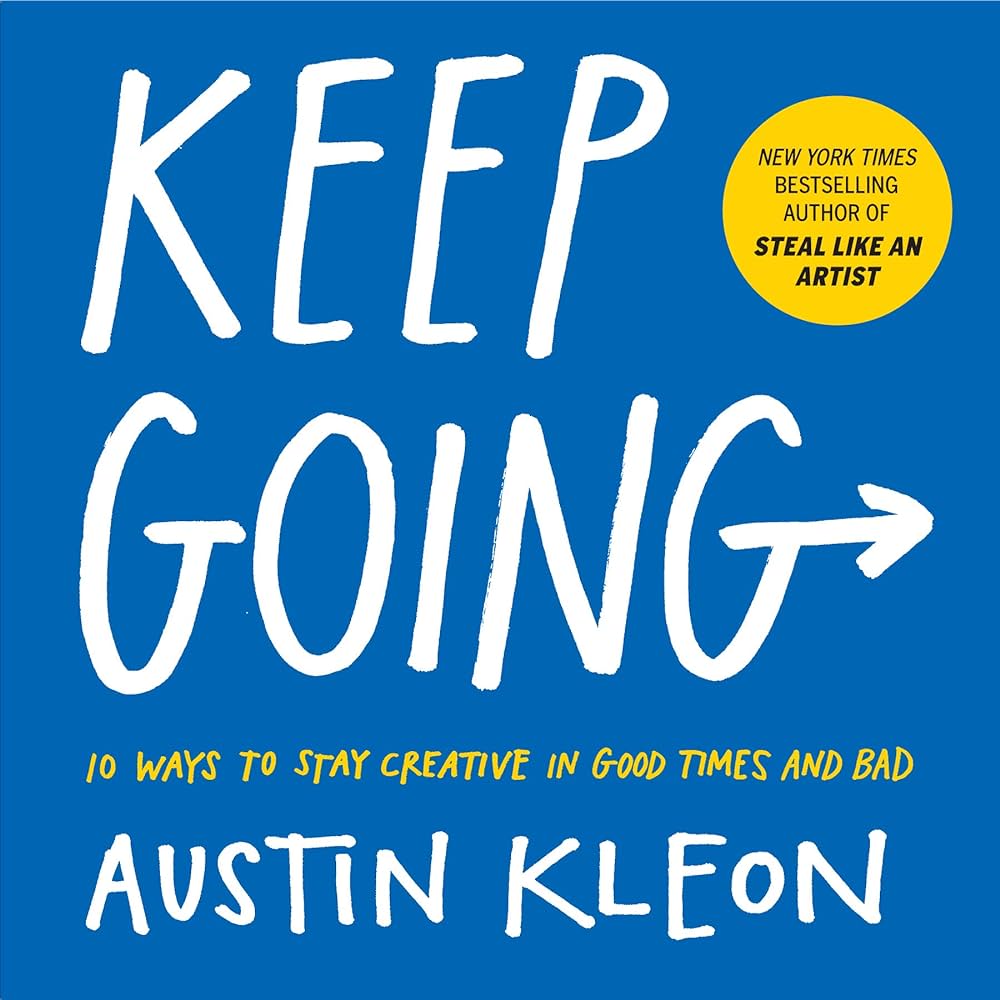
However, I recently finished Austin Kleon’s Keep Going and I have good things to say. I’ve been a fan of Austin Kleon since when I read his first book, Steal Like an Artist, shortly after I graduated high school in 2013. I remember being enthralled by his message that we have to stay creative even when we’re feeling uninspired and like nothing we make is original. (Side note: there’s no such thing as an original work these days. Every thing has been done, just do your best version of it!)

Keep Going did not disappoint. While so many terrible things are happening in the world right now, it’s crazy important for us to keep going as creatives. I know a lot of you might be doing Camp NanoWriMo next month, and maybe you should give this a read before you set off on your next challenge.

It’s a brief read, and there are illustrations throughout the book. Winter is a challenging time for me, so I needed the pick me up of something inspiring. Kleon touches on how we can stay creative by doing things like staying off of social media and maybe turning your phone on airplane mode, developing and maintaining a practice practice of your craft, and even having a special spot to do what you do.

This is a great read for creatives that are crawling out of the Winter Sad and need a pick me up to start doing what we as artists need to do most: make things.

You can buy Keep Going here. Or, you can use this unseasonably warm weather (72 degrees in Februrary here in Kansas) as an opportunity to go to the library and pick up a copy.

I want to hear your thoughts on how you stay inspired and motivated to keep going in those down periods. Like, comment, subscribe, and let’s start a conversation!

Till next time!

Alicia

Sweet, Sweet Writing

Sweet, Sweet Writing

Hello, everyone!

When I was writing this morning, I started thinking about how dope my writing sessions are. I always come out of them feeling relaxed, accomplished, and inspired. I don’t have a book recommendation today because I am working on finishing any one of the million books that I’m reading right now.

So, here are my tips for a low-key writing session:

  • Always sit down at your desk or writing spot with a cup of coffee (S tier writing beverage) or your beverage of choice. There’s something about truly spoiling yourself with a nice drink as you sink into your chair to write. Having a coffee by my side makes me feel prepared for anything that might come up while I’m writing.
  • Keep various writing tools in your workspace. This might seem like a no brainer, but let me explain. When I sit down at my desk, I’m thrilled to see the notebooks I purchased most recently, (lately, I’ve been hitting up my local Target’s back-to-school section for $2.99 notebooks) the pens and planner that I bought etc. Then, of course, there’s my laptop.
  • Keep productive clutter on your desk. Eek! Did she just say, “productive clutter“? I absolutely did. I know it’s not the most popular advice, especially when minimalism is so popular right now, but I honestly prefer my desk to look like it’s been truly lived at. My version of productive clutter is a series of fiction books that I keep on the other end of my desk, and then a couple of books about writing. There’s something about surrounding myself with literature that makes me feel like I’ve truly escaped real life and I’m swimming in the dreams I’ve created with my own pen.
  • Make sure you keep your ears busy. Some of you might live in busy cities, I am fortunate enough to live in small big city in Kansas, so there’s not a ton of noise pollution. However, one of the reasons I’ve always taken to writing is that I have an overactive imagination. If I don’t keep my ears busy, that’s when the intrusive thoughts start to roll in and I can’t get anything done. I like to listen to a podcast or one of the playlists that I’ve made for my project. I have a different playlist for each project.
  • Wipe the dust off. No, not the dust on your desk, I could not give even a little bit of fuck about whether or not your workspace has dust in it. That’s not the kind of advice you’re going to get here. What I mean when I say ‘wipe the dust off’ is you should do a writing warmup. If you’re the kind of person who can’t turn the editor off as they write, a quick writing practice before you get to the main event will help you boss up to your piece feeling more confident. 5 minutes with you and your pen. I like to refer to a book of writing prompts when I do this, today I used this one.

That’s all I’ve got for today, but I’d love to hear from you guys about what you do to create an amazing writing session. What are your tips?! Leave a comment and turn on notifications for ajcreads to keep the conversation going.

I’ll be back next time with a book recommendation!

See you next time,

Alicia